
A customer loyalty program rewards people for buying from you repeatedly, so they come back sooner and choose you over a competitor. Done well, it's one of the cheapest ways to grow: keeping a customer usually costs far less than winning a new one. Done badly, it's a permanent discount for people who would have bought anyway. This guide covers the main types, how to set the numbers, and the rules to check in your region.
The main types of loyalty program
- Points: customers earn points per purchase and redeem them for a discount or product. Flexible and familiar.
- Tiers: spending more unlocks a higher level with better rewards. Good at moving good customers to great ones.
- Paid membership: customers pay a fee for ongoing benefits such as free shipping or member prices. Powerful when the benefit is clearly worth more than the fee.
- Cashback and store credit: a percentage back as credit to spend next time. Simple to understand.
- Referral rewards: customers earn when friends buy. Turns loyalty into acquisition.
- Punch cards: buy nine, get the tenth free. Ideal for cafés and frequent, low-value purchases.
Set the numbers before the design
A loyalty program is a pricing decision. Work out:
- Reward value as a percentage of spend. For example, 1 point per $1, with 100 points worth $5, returns 5% of spend. Make sure your margin can carry it.
- Redemption threshold. Low enough that customers reach a first reward within two or three purchases, or they lose interest.
- Breakage. Some points are never redeemed. Don't design around breakage; a program that only works if people forget about it annoys the customers you most want to keep.
- What you're trying to change: purchase frequency, basket size or retention. Choose rewards that push that behaviour, such as bonus points on a second order within 30 days.
Rewards customers value beyond discounts
- Early access to new products and sales.
- Free shipping or free returns.
- Birthday rewards.
- Members-only products or bundles.
- Bonus points for reviews, referrals and profile completion.
Make it easy
- Automatic enrolment at account creation or first purchase.
- Balance everywhere: in the account page, at checkout, in order emails and at the till.
- Redeem at checkout in one step, online and in store.
- Reminders when points are about to be enough for a reward, or about to expire.
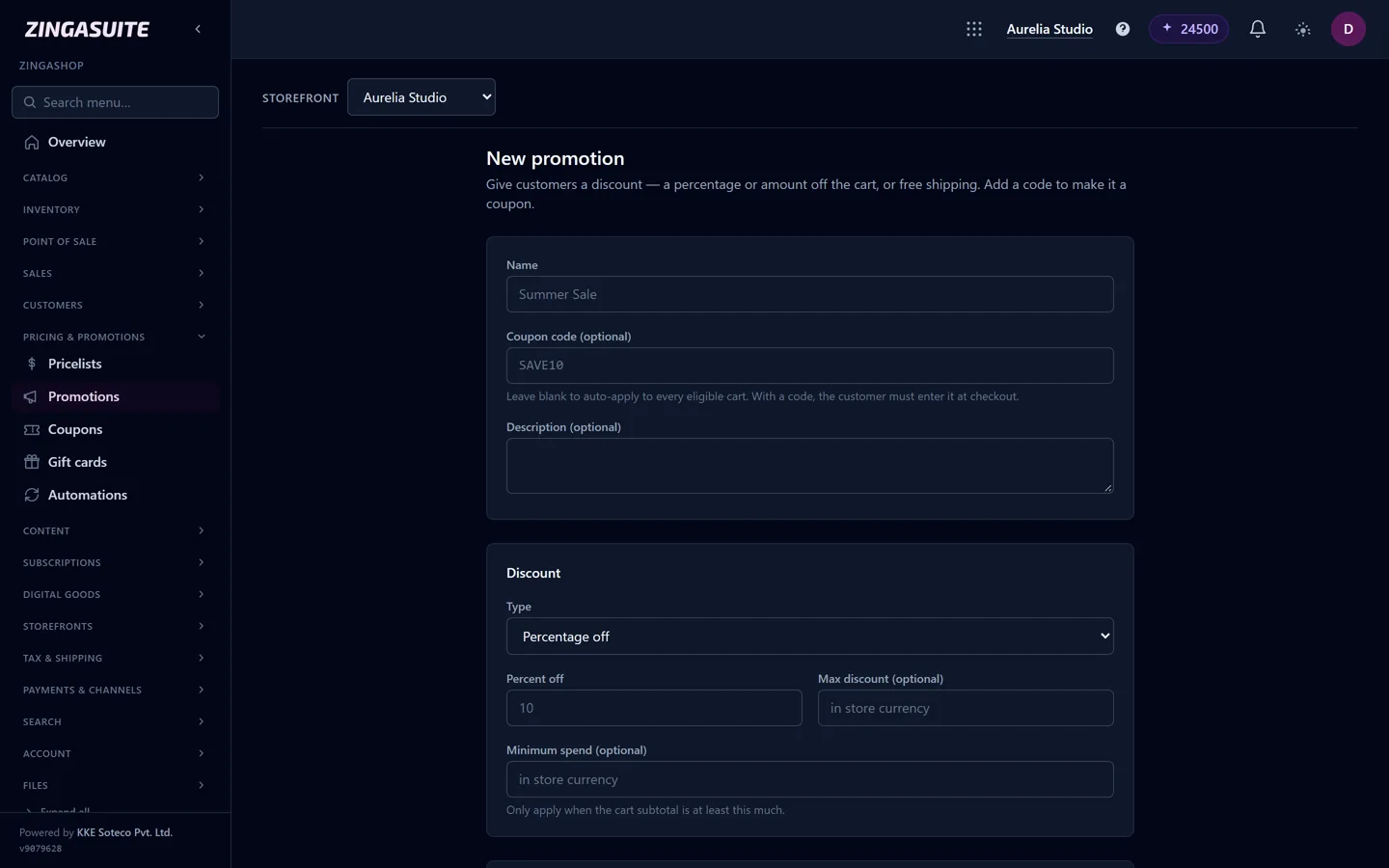
Rewards and discounts share one promotions engine: percentage or fixed off, free shipping, coupon codes and minimum spend.
Measure whether it works
- Repeat purchase rate and time between orders for members vs. non-members.
- Average order value for members.
- Redemption rate: too low and customers don't value the rewards; very high may mean rewards are too generous.
- Program cost as a share of member revenue, tracked monthly.
Accounting and legal points by region
Unredeemed points are a liability in your accounts under common accounting standards; talk to your accountant about how to record them. Beyond that:
- United States: points programs are largely governed by your own terms, but gift cards are different: federal rules generally prevent them from expiring within five years, and many states go further. Keep points and gift cards clearly separate in your terms.
- Canada: several provinces restrict expiry dates on gift cards, and Ontario and Quebec have rules about loyalty points expiring purely because time has passed. Check the rules in each province you sell to.
- United Kingdom: make program terms clear and fair under consumer law, including how points are earned, when they expire and whether you can change the scheme.
- European Union: loyalty data is personal data under GDPR, and profiling customers for personalised offers needs a lawful basis and a clear privacy notice. When you advertise a member price reduction, EU price-indication rules require the "before" price to be the lowest price of the previous 30 days.
- Australia: the ACCC has scrutinised loyalty schemes for unclear terms and data use; state the value of points, how they expire and what you do with members' data in plain language.
A simple program for a small shop
- 1 point per dollar (or pound, euro) spent, online and in store.
- 100 points = a $5 reward, redeemable at checkout.
- Double points on a second order within 30 days of the first.
- A birthday reward of 100 points.
- 200 points for each referred friend's first purchase, and a first-order discount for the friend.
- Points expire after 12 months without a purchase, with reminders at 30 and 7 days before (check local rules first).
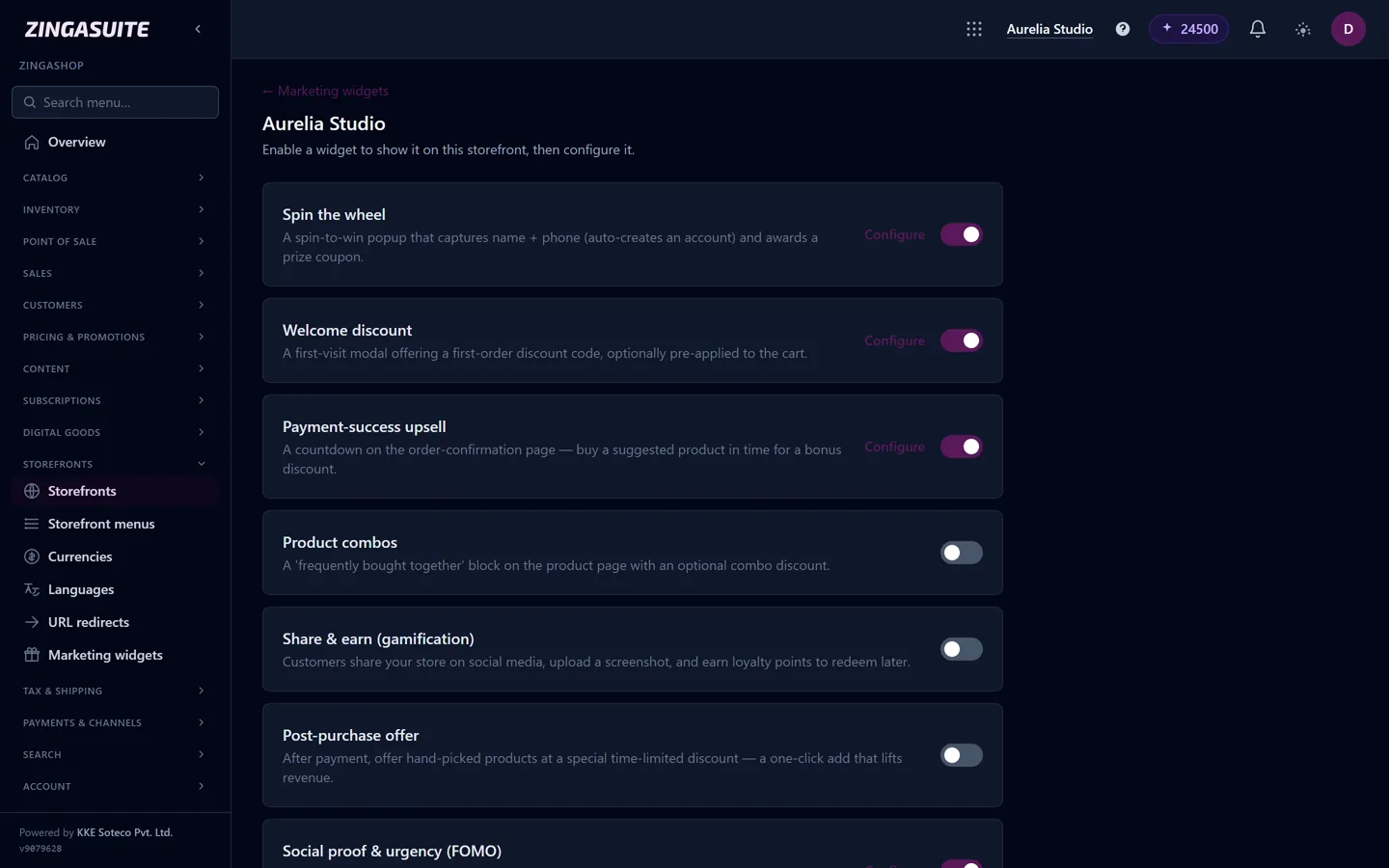
Marketing widgets per storefront: spin-the-wheel sign-ups, welcome discounts, post-purchase offers, combos and share-and-earn rewards.
Running loyalty on ZingaShop
ZingaShop includes loyalty and promotions on the Growth plan ($49/month): customers earn points on purchases and redeem them as discounts at checkout, alongside referral rewards, gift cards and store credit. Coupons, automatic discounts, combos and marketing widgets such as welcome offers and post-purchase upsells run on the same promotions engine, so rewards and discounts don't conflict. With the ZingaShop POS, the same customers, gift cards and credit work in store. To bring members back, pair the program with email and WhatsApp campaigns from ZingaConnect.
FAQ
Common questions
What is a customer loyalty program?
What is the best type of loyalty program for a small business?
How much should a loyalty program give back?
Should loyalty points expire?
How do I measure if my loyalty program works?
Reward repeat customers
ZingaShop's Growth plan includes loyalty points, referrals, gift cards and store credit.